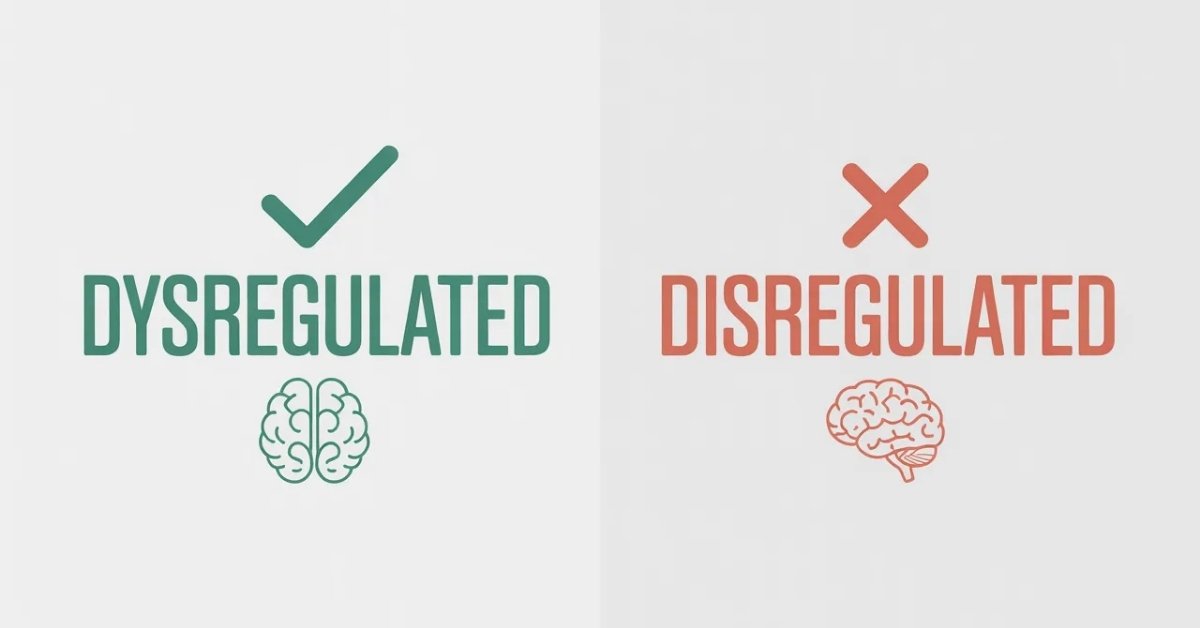
You’ve probably seen both spellings floating around — dysregulated and disregulated. Maybe you typed one and spellcheck flagged it. Maybe you saw both in articles and wondered if there’s actually a difference. Let’s clear this up once and for all.
The Short Answer: “Dysregulated” Is the Correct Word
In medical, psychological, and everyday language, dysregulated is the accepted, standard spelling. If you’re writing a paper, talking to a therapist, or describing emotional responses, this is the word you want.
Disregulated does appear in some older texts and informal writing, but it’s widely considered incorrect — or at best, a non-standard variant.
Why the Confusion Exists
Both words look plausible because English has two similar prefixes: dis- (meaning “not” or “lack of”) and dys- (meaning “abnormal” or “impaired”). When people write disregulated, they’re naturally reaching for that familiar dis- prefix, the same one in words like “disconnect” or “disorganized.”
But here’s the thing — the word regulate pairs specifically with dys-, which signals something has gone wrong with a process. That distinction matters.
What Does “Dysregulated” Actually Mean?
At its core, dysregulated means a system or function isn’t working properly — whether that’s a biological process, an emotional response, or a behavioral pattern.
You’ll hear it most in:
- Mental health — “emotionally dysregulated” means someone is struggling to manage their emotional reactions
- Medicine — a dysregulated immune system may attack healthy cells
- Neuroscience — the nervous system can become dysregulated after trauma or chronic stress
Think of it like a thermostat that’s gone haywire. The heating system still works — it’s just not responding the right way anymore.
Real-Life Example: Emotional Dysregulation
Here’s something most people can relate to: you get cut off in traffic and suddenly you’re furious beyond what the situation warrants. Your heart is pounding, you’re clenching the wheel — all over a two-second moment.
That’s emotional dysregulation in action. Your nervous system overreacted. The response wasn’t proportionate to the trigger.
This isn’t a character flaw. It’s a pattern that many people experience, especially those with ADHD, PTSD, anxiety disorders, or borderline personality disorder (BPD).
“Dys-” vs “Dis-” — A Quick Breakdown
Here’s a simple way to remember which prefix to use:
- Dis- = absence or reversal (disable, disconnect, disagree)
- Dys- = abnormal function (dysfunction, dyslexia, dysregulated)
So dysregulated fits because the regulatory function isn’t absent — it’s impaired or off-track. The system is still there; it’s just not working right.
Is “Disregulated” Ever Used?
Yes — but rarely, and mostly in error. Occasionally it pops up in older academic papers or casual writing. Some specialized fields used it before dysregulated became the dominant term.
If you search both terms in medical databases, dysregulated appears thousands of times more often. The consensus is clear.
Common Contexts Where You’ll See “Dysregulated”
This word shows up more than you might expect:
- Parenting and child development — children who haven’t yet developed emotional regulation skills are described as dysregulated
- Trauma therapy — a trauma response can dysregulate the body’s stress system
- Autoimmune conditions — the immune system is dysregulated in conditions like lupus or rheumatoid arthritis
- Sleep and hormones — cortisol dysregulation affects sleep cycles and mood
Related Terms Worth Knowing
While we’re here, a few related words that often come up alongside dysregulated:
- Dysregulation — the noun form (“emotional dysregulation is common in ADHD”)
- Self-regulation — the ability to manage your own emotions and behaviors
- Co-regulation — when one person helps another calm down (common in parent-child relationships)
- Nervous system dysregulation — a growing term in trauma and somatic therapy circles
How to Remember the Correct Spelling
Simple trick: think of other dys- words that describe impaired functions — dysfunction, dyslexia, dyspnea. They all describe something that’s working wrong, not something that’s simply absent.
Dysregulated fits right in that family.
Does the Spelling Actually Matter?
In casual conversation? Not really. Most people will understand what you mean either way.
But in professional, medical, or academic writing — yes, it matters. Using the wrong spelling can undermine your credibility, and in clinical notes or research, precision counts.
If you’re a therapist, educator, or healthcare professional writing about emotional regulation, stick to dysregulated. It’s what the field uses.
Quick Summary
| Dysregulated | Disregulated | |
| Correct spelling? | ✅ Yes | ❌ Rarely accepted |
| Used in medicine/psychology? | ✅ Standard | ❌ Non-standard |
| Prefix meaning | Dys- = impaired | Dis- = absent/reversed |
| Example | “emotionally dysregulated” | Avoid this form |
FAQs
Is “dysregulated” or “disregulated” the correct spelling?
“Dysregulated” is the correct spelling. It uses the prefix dys-, meaning impaired function, and is the medically accepted term.
What does dysregulated mean in simple terms?
Dysregulated means a system — emotional, biological, or neurological — isn’t functioning properly. It’s working, just not working right.
Can a person be emotionally dysregulated without a diagnosis?
Yes. Anyone can experience emotional dysregulation temporarily due to stress, sleep deprivation, or overwhelming situations — no diagnosis required.
Is “disregulated” ever used in academic writing?
Rarely. It appears in some older texts but is largely considered non-standard. Most academic and clinical sources exclusively use “dysregulated.”
What is the difference between dysregulation and dysfunction?
Both use dys-, but dysfunction means a system fails to work, while dysregulation means it works abnormally or inconsistently.
Final Thought
Language is messy, and these things genuinely confuse people — especially when two similar prefixes both seem logical. But once you understand that dys- is about impaired function rather than simply the absence of it, the right spelling clicks into place.
Dysregulated is your word. Use it with confidence.

I’m Daniel Carter, founder of wordwix.com, a creative space focused on powerful and meaningful words. I explore ideas, meanings, and inspiration to help you find the perfect words for any purpose with clarity and creativity.