If you’ve ever come across the word trama and wondered if it means the same thing as trauma, you’re not alone. These two words look almost identical, but they’re very different — in meaning, language, and context. Let’s break it down simply.
What Does “Trama” Mean?
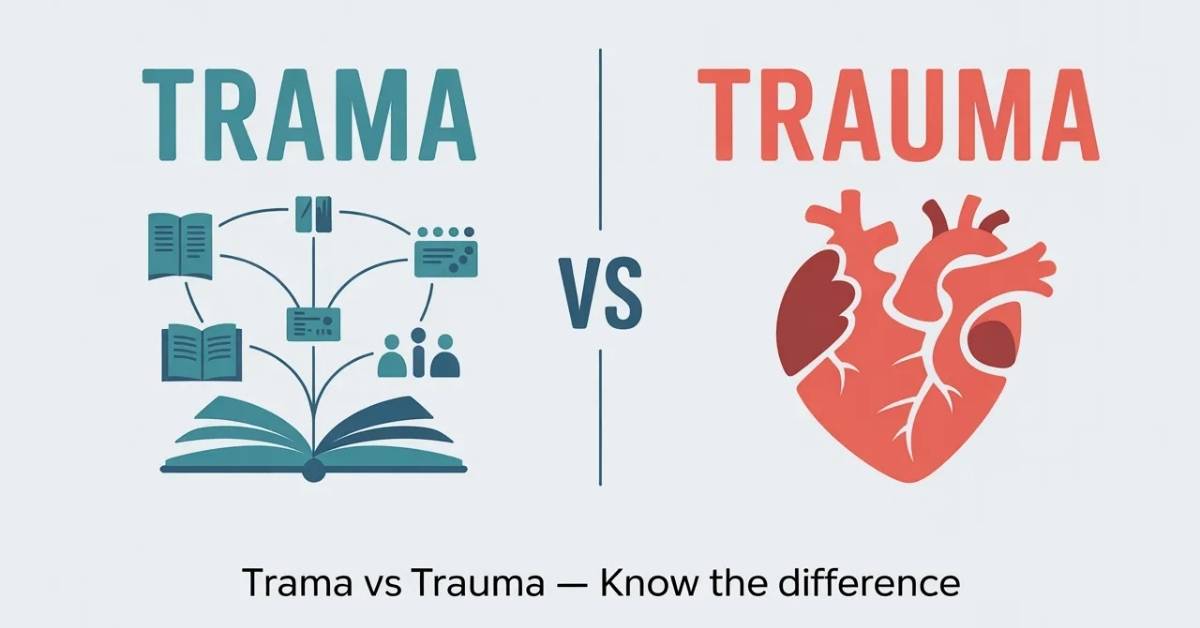
Trama is a word from Spanish and Italian. In both languages, it primarily means plot, storyline, or scheme. It comes from the Latin word trama, meaning “weft” — as in the threads woven together in fabric.
Think of it this way: the trama of a novel is the web of events the author weaves together. A Spanish speaker saying “me encantó la trama de la película” means “I loved the plot of the film.”
What Does “Trauma” Mean?
Trauma comes from ancient Greek (τραῦμα) and means a wound — originally a physical one. Over time, especially in modern psychology, it evolved to describe a deep emotional or psychological wound caused by a distressing event.
Someone who survives a car accident, loses a loved one suddenly, or goes through abuse can develop trauma. It’s a serious psychological term used widely in mental health, medicine, and everyday conversation.
Are They the Same Word in Different Languages?
Not really. Here’s the clearest way to see it:
- Trama (Spanish/Italian) = plot, storyline, conspiracy
- Trauma (English/Psychology) = emotional or physical wound
In Italian, the word trauma also exists and is used in the psychological sense — just like in English. So Italian speakers use both words, and they mean completely different things.
Where the Confusion Comes From
The confusion usually happens in one of these situations:
- A Spanish learner reads the word “trama” and assumes it means “trauma” because it looks similar
- A bilingual speaker mixes up the two in casual conversation
- Someone doing a quick translation guesses wrong
This is a classic example of a false cognate — words in two languages that look or sound alike but have different meanings. Linguists sometimes call these “false friends.”
Another famous example: the Spanish word embarazada looks like “embarrassed” but actually means “pregnant.”
How “Trama” Is Used in a Sentence
In Spanish:
- La trama de la novela era muy complicada. — The novel’s plot was very complicated.
- Descubrieron la trama del político. — They uncovered the politician’s scheme.
In Italian:
- La trama del film mi ha sorpreso. — The film’s plot surprised me.
It’s always about a story structure or a hidden plan — never about emotional pain.
How “Trauma” Is Used in a Sentence
In English and modern psychology:
- Childhood trauma can affect a person’s adult relationships.
- She went through trauma after the accident.
- Therapy helps people process unresolved trauma.
Trauma is about pain, shock, and psychological impact — it’s emotional, deep, and often long-lasting.
Can “Trama” Ever Mean Trauma?
Interestingly, in some informal Spanish usage — especially in Latin American slang — trama is occasionally used loosely to describe a dramatic or messy situation. But even then, it doesn’t carry the clinical weight of trauma.
If you’re in a Spanish-speaking context and want to talk about psychological trauma, use the word trauma — it exists in Spanish too, and it means exactly what it means in English.
The Linguistic Roots: A Quick Comparison
Both words share distant roots in the idea of something woven or wounded:
- Trama → Latin trama (weaving thread) → plot/scheme/story
- Trauma → Greek τραῦμα (wound) → injury/shock/psychological damage
Same era, very different directions.
Why This Matters in Translation and Writing
If you’re translating content, writing bilingual copy, or learning a language, mixing up these two words can cause real misunderstandings.
Imagine writing a psychology article in Spanish and accidentally using “trama” when you mean “trauma.” Your readers would think you’re talking about a storyline, not a mental health condition. That’s a significant error in tone and meaning. Always double-check false cognates when working across languages.
A Simple Memory Trick
Here’s one that works:
Trama = plot, like a drama in a story. Trauma = a wound, something that harms you.
Both have the letters T-R-A-M-A or T-R-A-U-M-A. The extra U in trauma stands for ugh — the emotional weight it carries. A bit silly, but it sticks.
FAQs
Is “trama” the same as “trauma”?
No, they are false cognates. Trama means plot or scheme, while trauma means a psychological wound.
Can “trama” be used in English?
No, trama is not an English word. It belongs to Spanish and Italian languages only.
Does “trauma” exist in Spanish?
Yes, trauma exists in Spanish too and carries the same psychological meaning as in English.
What language is the word “trama” from?
Trama comes from Spanish and Italian, both derived from the Latin word meaning woven thread.
Why do people confuse trama and trauma?
They look nearly identical. This visual similarity makes them classic false cognates across different languages.
Final Thought
Trama and trauma are two words separated by a single letter but worlds apart in meaning. One belongs to the language of storytelling; the other to the language of healing. Knowing the difference makes you a sharper communicator — whether you’re writing, translating, or just trying to understand what someone meant.
Language is full of these little traps. The best way to avoid them is exactly what you’re doing — looking things up and asking questions.

I’m Daniel Carter, founder of wordwix.com, a creative space focused on powerful and meaningful words. I explore ideas, meanings, and inspiration to help you find the perfect words for any purpose with clarity and creativity.