Let’s be honest — most of us have typed “role call” at some point and never thought twice about it. It sounds right. It feels right. And nobody around you said anything, so you kept going.
But here’s the thing: it’s wrong.
The correct phrase is roll call, and the mix-up is far more common than most people realize. It shows up in office emails, event announcements, school newsletters, and even published articles. Spell-checkers don’t flag it because “role” is a perfectly real word — just not the right one here.
So what’s the difference, and why does it matter? That’s exactly what this article breaks down. By the end, you’ll know which one to use, why the confusion happens in the first place, and a simple trick to make sure you never mix them up again.
The Short Answer First
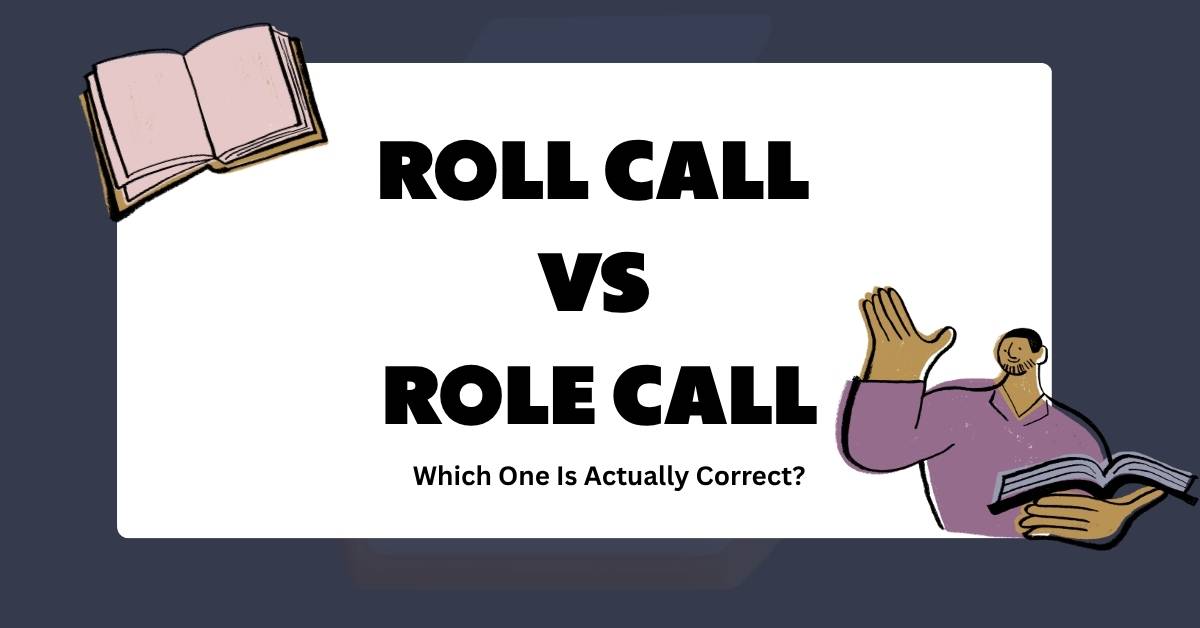
The correct phrase is roll call — not “role call.” If you’ve been writing “role call” your whole life, don’t feel bad. You’re in very good company. This is one of the most common mix-ups in the English language, and it’s easy to see why.
But let’s dig into this properly so it actually sticks.
What Does “Roll Call” Actually Mean?
A roll call is the act of reading out names from a list — usually to check who is present. Think of a teacher reading names at the start of class, or a sergeant checking attendance before a mission.
The word roll here refers to a physical or official list. Historically, these lists were kept on rolled-up scrolls or parchment — hence “roll.” The phrase has been in use since at least the 18th century.
Real-world example
“The teacher did a roll call before the field trip to make sure no student was left behind.”
Why Do People Write “Role Call” Instead?
Because roll and role are homophones — they sound exactly the same when spoken aloud. Your brain hears “role call” and spells it the way role is used in other familiar phrases (like “leading role” or “role model”).
It’s a classic case of a spelling error born from sound, not meaning.
“Role call” sounds perfectly natural in conversation — which is exactly why it keeps showing up in emails, reports, and headlines. Nobody catches it until someone reads it twice.
Breaking Down the Two Words
| Word | Meaning | Used in |
| Roll | A list or register of names; also to turn over, or a bread roll | Roll call, drum roll, bread roll, honor roll |
| Role | A function, position, or part someone plays | Role model, role-play, leading role, job role |
Once you see the difference in meaning, the right choice becomes much clearer. You’re calling out names from a list (roll) — not assigning someone a function (role).
Quick Examples: Right vs Wrong
Correct
“The manager took roll call at the beginning of the safety drill.”
Incorrect
“The manager took role call at the beginning of the safety drill.”
Correct
“Roll call revealed that three employees hadn’t shown up.”
Incorrect
“Role call revealed that three employees hadn’t shown up.”
Where Is “Roll Call” Commonly Used?
You’ll see this phrase across a lot of different contexts:
- Schools — Teachers take roll call to mark attendance at the start of class.
- Military — Soldiers are called to roll call every morning to verify presence.
- Workplaces — Some offices and warehouses do a roll call at shift start.
- Events — Roll call is used at ceremonies to honor or acknowledge attendees.
- Politics — Legislative bodies hold a “roll call vote” where each member’s vote is recorded individually.
The “Honor Roll” Connection
Another clue that helps: think about the phrase honor roll — the list of high-achieving students. Same concept, same word. An honor roll is literally a roll (a list) of honored names.
Roll call works the same way — it’s the calling out of names from a roll (list). Once you connect roll = list, it clicks permanently.
Does “Role Call” Have Any Meaning at All?
Not in standard English. “Role call” doesn’t appear in any major dictionary as a legitimate phrase. It’s purely a spelling error — a misspelling of “roll call” that has spread so widely, it almost looks credible at first glance.
Some informal writers use “role call” creatively to mean “a roundup of roles or characters” — but this isn’t accepted usage. In formal writing, always go with roll call.
Related Terms Worth Knowing
While we’re here, a few related phrases that follow the same “roll = list” logic:
- Roll call vote — A vote where each person’s choice is recorded by name.
- Honor roll — A list recognizing academic excellence.
- Payroll — The official list of employees and their salaries.
- Electoral roll — The official list of registered voters.
Notice how all of these use roll to mean a formal, documented list. “Role call” just doesn’t fit this pattern.
A Simple Trick to Remember It
Here’s the memory trick that works best: Think of a scroll of paper — literally a rolled piece of parchment with names written on it. When a teacher, officer, or official calls out those names, they’re reading from the roll.
Roll → rolled paper → list → roll call. That chain is easy to remember and gets it right every time.
Is This a Big Deal in Professional Writing?
Yes, more than people expect. Using “role call” in a business email, formal report, or news article signals to careful readers that something is off. It’s the kind of error that a grammar checker might miss because “role” is itself a valid English word.
In journalism, legal writing, and academic work, this matters. Spell-checkers won’t always catch it — but editors will.
What About British vs American English?
No difference here. Both British and American English use roll call as the correct phrase. There’s no regional variation to worry about. Whether you’re writing for a New York office or a London boardroom, it’s always roll call.
The Bottom Line
Roll call is correct. Role call is a very common — but still wrong — spelling mistake. The mix-up happens because both words sound identical, but they mean completely different things.
Next time you’re writing about attendance, voting, or checking off names: remember the scroll, remember the list, and reach for roll — not role.
One small fix, and you’re ahead of a surprising number of writers.

I’m Daniel Carter, founder of wordwix.com, a creative space focused on powerful and meaningful words. I explore ideas, meanings, and inspiration to help you find the perfect words for any purpose with clarity and creativity.