Have you ever seen a twisted, dark tree tattoo and wondered what story it tells? Maybe you are thinking about getting one yourself but want to make sure you truly understand what it means before it becomes permanent on your skin.
The poison tree tattoo meaning runs much deeper than just a cool-looking dark tree. It carries suppressed anger, hidden resentment, emotional pain, and some seriously powerful literary history. This article breaks down everything you need to know, from William Blake’s famous poem to what it means on the streets of America today.
Quick Answer
TL;DR
A poison tree tattoo symbolizes suppressed anger, inner conflict, and the dangerous consequences of hiding your emotions. Rooted in William Blake’s 1794 poem A Poison Tree, it warns that unspoken resentment grows into something destructive. People get this tattoo to represent personal transformation, emotional honesty, or survival through emotional pain.
What Is a Poison Tree Tattoo?
A poison tree tattoo is a dark, symbolic tattoo design inspired by the idea of a tree that grows from hidden, toxic emotions. It does not celebrate poison or darkness for its own sake. Instead, it tells a story about what happens inside a person when they bottle up their feelings and let them fester silently.
This tattoo is chosen by people who have gone through serious emotional struggles, faced betrayal, or finally decided to confront their internal struggle rather than hide it. It is raw, personal, and deeply meaningful for anyone who wears it.
Common Visual Elements
Most poison tree tattoos share these recognizable design features:
- Dead or twisted branches reaching outward like grasping hands
- Dark forbidden fruit hanging from the branches, often black or deep red
- Gnarled roots that look like they are gripping the earth with force
- Shadowy or dying leaves, sometimes falling or decomposing
- A dark figure or silhouette near the tree, representing the observer or the victim
- Minimal color, heavy black ink, or dark watercolor washes
Core Symbolism at a Glance
The poison tree tattoo symbolism hits hard because it is not just about a tree. It is about the human experience of anger, silence, and consequence.
Main Symbolic Themes
- Suppressed anger that quietly grows into something dangerous
- Moral responsibility for what we choose to express or hold back
- Emotional consequences of letting resentment take root
- Personal accountability for how we handle pain
- Emotional growth that sometimes only comes after hitting rock bottom
- Corrupted tree symbolism, representing something once pure turned toxic
Literary Origins: William Blake’s Poison Tree
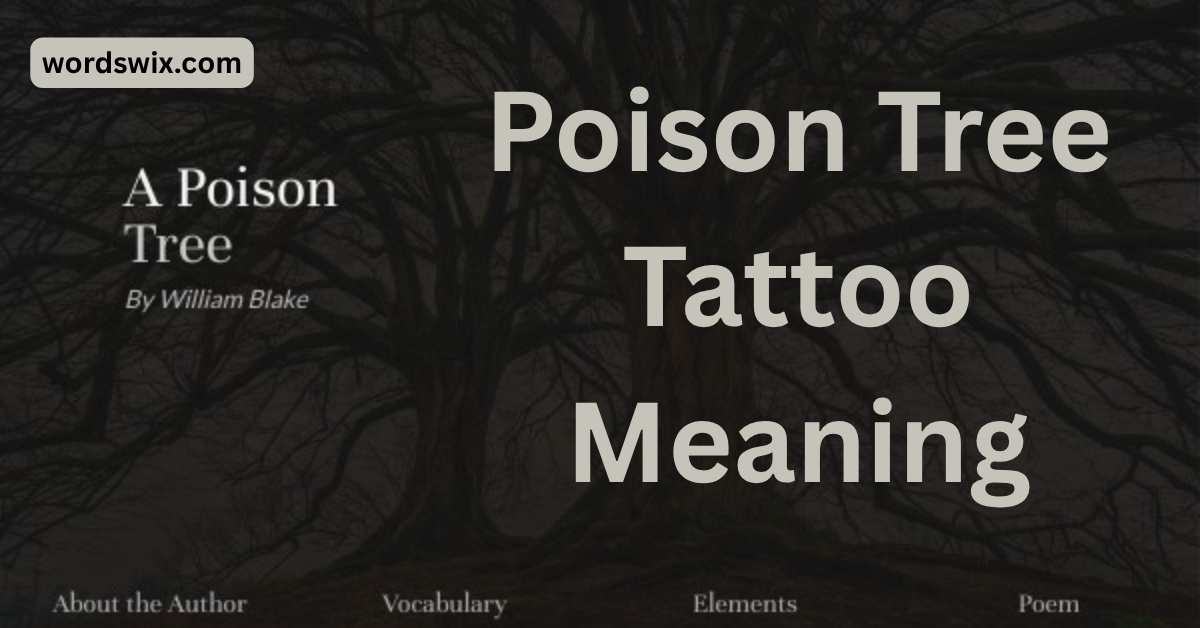
You cannot talk about the poison tree tattoo literary origin without going straight to the source. William Blake wrote A Poison Tree in 1794 as part of his collection Songs of Experience. It is a short poem, but its message about moral storytelling and emotional honesty punches way above its weight.
The Poem’s Core Message
In the poem, Blake describes two situations. He tells a friend he is angry, the anger ends. He hides his anger from an enemy, and it grows. That hidden anger becomes a tree. The tree grows a bright, shiny apple. The enemy eats the apple and dies.
The poem’s core message is this: hidden resentment is not harmless. It feeds itself. It grows. And eventually, it destroys.
This is exactly why William Blake A Poison Tree poem became such a powerful source of literary tattoo inspiration. It captures emotional awareness and moral symbolism in literature in just a few lines that feel personal to almost anyone.
Older Symbolic Roots of Poisoned Trees
The symbolism of poisoned trees did not start with Blake. Cultures around the world have used the image of a corrupted or deadly tree to represent danger, forbidden knowledge, and moral warning for thousands of years.
Pre-Modern Symbol Patterns
- The Tree of Knowledge in the Bible carries poisonous fruit symbolism, representing temptation and consequence
- Norse mythology features Yggdrasil, a cosmic tree that holds both life and decay
- Ancient Greek texts reference cursed trees connected to death and underworld journeys
- Medieval European art used twisted tree tattoo symbolism in illustrations of sin and suffering
- Many Indigenous cultures viewed diseased or dead trees as spiritual warnings from the earth
These older roots give the symbolic tree tattoos of today a layered, cross-cultural depth that goes far beyond any single poem.
Poison Tree Tattoo Meaning in the USA
In American tattoo culture, the poison tree tattoo symbolism in America often carries a very personal and emotional weight. Americans tend to connect this tattoo to lived experience rather than just literary knowledge.
Common American Interpretations
In the USA, people often get this tattoo after going through something heavy:
- Surviving a toxic relationship where hidden resentment slowly destroyed the connection
- Dealing with emotional pain from family conflict, betrayal, or grief
- Representing a personal turning point where they chose emotional maturity over silent suffering
- Marking a journey of emotional healing after years of holding everything inside
- Using it as a reminder of personal accountability, a permanent note to themselves to never let anger grow unchecked again
The symbolism of anger growing is deeply relatable in American culture, where emotional suppression is common but rarely talked about openly.
Emotional and Psychological Associations
The psychological meaning of poison tree tattoo is one of the reasons therapists, psychologists, and mental health advocates sometimes reference it in conversations about mental health symbolism.
Emotional Signals the Tattoo Sends
This tattoo communicates a lot without words:
- “I have felt deep inner conflict and I survived it”
- “I understand the cost of suppressed anger“
- “I am in a place of emotional growth or working toward it”
- “I carry emotional consequences from my past but I own them”
- Psychological symbolism in the design speaks to anyone who has ever struggled silently
For many wearers, it is not about darkness. It is about emotional maturity, acknowledging the hard parts of being human.
Spiritual and Cross-Cultural Meanings
The spiritual symbolism of trees runs through nearly every major culture on earth. The poison tree version of this adds a layer of warning, shadow, and transformation to that universal spiritual image.
Cross-Cultural Interpretations
- Eastern traditions connect dark or dying trees to cycles of karma and consequence
- Celtic symbolism ties twisted trees to gateways between worlds and hidden truths
- African spiritual traditions see corrupted trees as signs of imbalance needing healing
- Buddhist interpretations link the poison tree to the dangers of clinging to anger and negative thought
- In modern psychological tattoo meanings, it represents shadow work, the practice of confronting the darkest parts of yourself
Popular Design Styles and Variations
The dark tree tattoo meaning comes through no matter the style, but the design choices shape how it reads on the skin.
Common Tattoo Styles
- Black and grey realism: Detailed, shaded, deeply atmospheric
- Neo-traditional: Bold lines, stylized branches, slightly illustrative
- Blackwork: Pure black ink, graphic and striking
- Watercolor: Soft dark washes giving an emotional, fluid feeling
- Minimalist: A simple silhouette, clean and understated
- Illustrative: Inspired directly by Blake-era woodcut art or poetry book illustrations
Each style shifts the emotional tone of the tattoo from raw and intense to quiet and reflective.
Color, Placement, and Added Symbols
Design Choices and Their Effects
Color plays a big role in poison tree tattoo design symbolism:
- All black: Classic, strong, focused on shadow and structure
- Deep red fruit: Highlights the temptation and danger element
- Purple or dark blue washes: Adds a dreamlike, haunting feeling
- Gold or yellow fruit on dark branches: Creates a striking contrast between beauty and danger
Placement matters too:
- Chest or sternum: Very personal, close to the heart, usually about emotional pain
- Forearm: Visible, a statement of identity and survival
- Back: Large canvas, often used for full narrative scenes
- Ribs: Painful placement chosen by those wanting the tattoo to feel earned
Added symbols often seen alongside it include ravens, falling leaves, hourglass imagery, and quotes from Blake’s poem.
Modern Usage in Media and Identity
Where You’ll See It Today
The poison tree tattoo meaning in modern tattoo culture has grown steadily. You will find it in:
- Alt and dark academia communities on platforms like Instagram and TikTok
- Mental health advocacy spaces, used as a symbol of emotional awareness and healing
- Literary tattoo communities where poetry-inspired tattoos are celebrated
- Music artists and creatives using it to represent symbolic tattoo storytelling
- Characters in indie films, graphic novels, and video games bearing this imagery to signal complex emotional backgrounds
Common Misunderstandings and Controversies
Frequent Misreadings
A few misunderstandings follow this tattoo around:
- Some people assume it means the wearer is toxic or dangerous. That is usually wrong. It most often represents someone who has survived toxicity, not caused it.
- Others read it as purely gothic or aesthetic with no deeper meaning, missing the literary symbolism entirely
- Some confuse it with general dead tree tattoos, which carry different symbolism around grief or loss without the specific anger and resentment layer
- It is occasionally misread as a negative or evil symbol, when most wearers use it for emotional healing and self-reflection
How the Meaning Has Shifted Over Time
Timeline of Meaning Changes
- 1794: Blake writes the poem as a moral warning about emotional dishonesty
- 1800s to early 1900s: The image stays literary, referenced mostly in academic and artistic circles
- Mid-1900s: Dark tree imagery enters tattoo culture through sailor and underground traditions
- 1990s to 2000s: Alternative and rock subcultures adopt dark tree tattoos as emotional identity markers
- 2010s: Mental health conversations bring new depth to the psychological tattoo meanings of dark imagery
- Today: The poison tree tattoo is understood as a deeply personal symbol of emotional growth, survival, and personal transformation
Poison Tree Tattoo Meaning by Context
The same tattoo can mean different things depending on who wears it and why:
- Worn by someone in recovery: Represents emotional healing and leaving toxic patterns behind
- Worn after a breakup or betrayal: Marks the moment hidden pain was finally acknowledged
- Worn by a Blake fan or literary enthusiast: A tribute to poetry inspired tattoos and the power of metaphor
- Worn as a mental health symbol: A quiet badge of inner conflict survived and understood
- Worn purely for aesthetics: Still carries cultural weight even if the wearer focuses on design
Understanding context is everything with this tattoo. Ask the person before assuming.
FAQs
What does a poison tree tattoo mean?
It symbolizes suppressed anger and hidden resentment that grows destructive when left unspoken. Most wearers use it to represent emotional survival and personal growth.
Where does the poison tree tattoo come from?
It originates from William Blake’s 1794 poem A Poison Tree, which warns about the dangerous consequences of bottling up emotions.
Is a poison tree tattoo negative?
Not really. Most people get it to represent emotional healing and self-awareness, not darkness or toxicity.
What styles work best for a poison tree tattoo?
Blackwork, black and grey realism, and minimalist styles work beautifully, each giving the tattoo a different emotional tone.
Where should you place a poison tree tattoo?
The chest, forearm, or back are most popular. Placement usually reflects how personal and visible the wearer wants their emotional story to be.
Conclusion
The poison tree tattoo meaning goes far deeper than just a dark, twisted tree on skin. Rooted in William Blake’s 1794 poem, it represents suppressed anger, hidden resentment, and the emotional consequences of staying silent too long.
People wear it as a symbol of emotional healing, survival, and personal transformation. Whether you connect with its literary roots or its psychological symbolism, this tattoo tells one honest truth: bottled-up emotions never stay quiet forever.
What does your poison tree tattoo mean to you? Drop your story in the comments below. Whether you are planning one or already wearing one, your experience adds to the meaning of this incredible symbol.

I’m Daniel Carter, founder of wordwix.com, a creative space focused on powerful and meaningful words. I explore ideas, meanings, and inspiration to help you find the perfect words for any purpose with clarity and creativity.