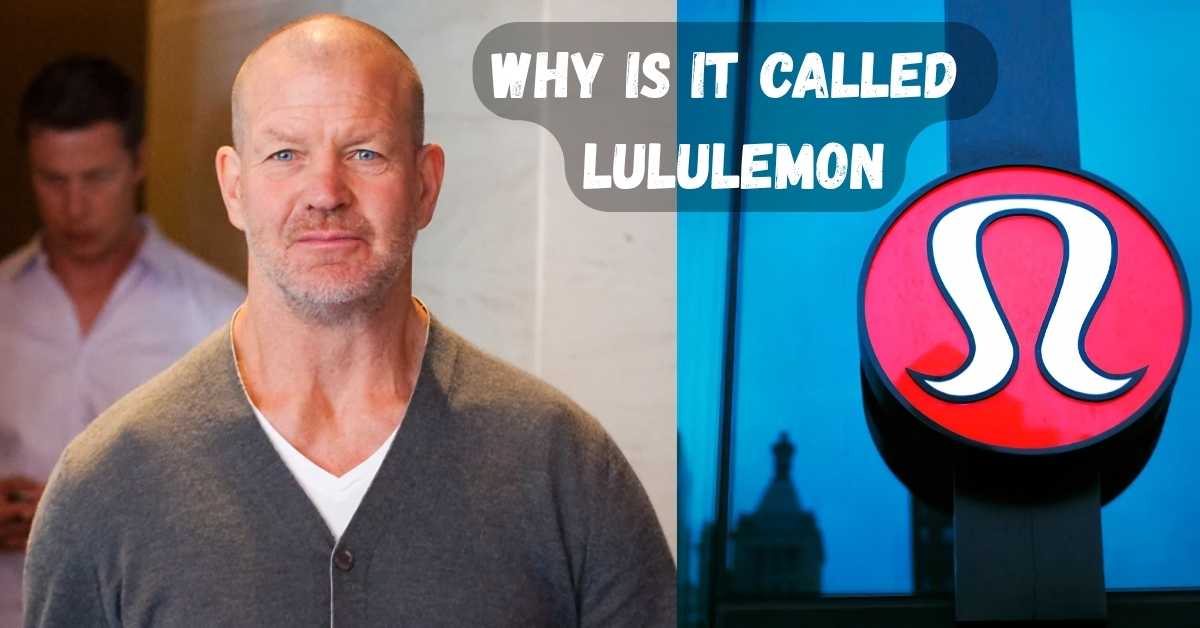
You see it on leggings, water bottles, and gym bags everywhere. The name is on millions of people’s bodies every single day. Yet most of them have no idea what it actually means or where it came from. If you have ever asked yourself, why is it called lululemon, you are far from alone. The answer is equal parts clever marketing, cultural strategy, and a founder who just really liked the letter L.
Here is the short answer: Lululemon means nothing. The name was invented. It has no roots in yoga, Sanskrit, or any spiritual tradition. It was chosen because it sounded playful, felt memorable, and contained three Ls for a very specific branding reason. Everything else is internet myth.
What Does Lululemon Actually Mean?
Lululemon has no literal meaning. It is a made-up word, created by founder Chip Wilson in the late 1990s when he was building his yoga apparel brand in Vancouver, Canada.
Wilson himself admitted this openly. The name has no translation, no hidden spiritual message, and no connection to yoga or wellness. It was designed to sound fresh, Western, and slightly exotic all at once. The three Ls were not an accident. They were the entire point.
Think of it like Nike or Adidas. Neither of those names explains what the product is. They are invented words built for sound, not meaning. Lululemon follows the same logic, just with a few extra Ls thrown in for good measure.
How Chip Wilson Came Up with the Name
The story begins in the 1990s, when Wilson was already running a successful skateboard brand called Homeless. His products were selling well in Japan, and he started noticing a pattern.
Japanese consumers loved the brand. Wilson believed it was because Homeless contained the letter L, a sound that does not naturally exist in the Japanese language. To Japanese ears, a brand name with an L felt authentically North American and desirable. A Japanese marketing firm, Wilson reasoned, would never use the letter L in a brand name because it sits outside their phonetic vocabulary. That absence made it feel foreign and premium.
Wilson took that insight and ran with it. When he began developing his yoga apparel concept around 1997 and 1998, he decided his new brand would go even further. He started writing names in notebooks, experimenting with alliterative sounds, playing with repeated syllables, and eventually landed on lululemon. Three Ls. Triple the appeal. At least, that was the theory.
The Focus Group That Sealed the Deal
Wilson did not just pick the name because he liked how it sounded in his notebook. He tested it properly.
He presented 100 people with 20 different brand names and 20 logo options. The participants voted, and lululemon came out on top. The name beat competitors including a strong contender called Athletically Hip, which lost the name vote but left behind a legacy: the stylized A in the Lululemon logo today was originally designed for Athletically Hip. Wilson liked the logo enough to keep it even after Athletically Hip lost.
So the logo you see on every pair of leggings is technically the ghost of a name that never made it. Branding is strange that way.
The Japanese Pronunciation Strategy Explained
This is where the story gets more complicated, and more controversial. Wilson was not just playing with L sounds for fun. He had a deliberate strategy: make the name difficult for Japanese speakers to pronounce so it would sound more authentically Western.
In Japanese, the letter L does not exist as a standalone sound. It is typically rendered as an R sound. So lululemon in Japanese phonetics becomes something close to rururemon. Wilson knew this. He had observed it with his skateboard brand. And he decided three Ls would make the name feel even more North American and exclusive to Japanese buyers.
In a 2004 interview with the National Post Business Magazine, Wilson was blunt about this. He said he thought watching Japanese people try to say the name was funny. Those comments drew significant backlash and remain one of the more uncomfortable parts of the brand’s founding story.
The nuance here matters. Wilson’s original motivation was that L-heavy names sounded premium and Western in Japan, which was a genuine marketing strategy, however insensitive the execution. The “funny pronunciation” comment came later and added a layer of mockery that the strategy did not require.
A Quick Comparison: What Lululemon Is NOT Named After
A lot of myths circulate online about this name. Here is a simple breakdown to clear them up.
| Theory | Is It True? |
| Named after a yoga pose | No |
| Inspired by a Sanskrit word | No |
| Named after a person called Lulu | No |
| Short for “lemon” as in freshness | Partially, Wilson noted “lemon” felt fresh, but it was incidental |
| Designed with three Ls for Japanese market appeal | Yes, confirmed by Wilson |
| Chosen through a focus group survey | Yes, from 20 names with 100 participants |
| Means nothing on its own | Yes, confirmed officially |
What About the Word “Lemon” in the Name?
Wilson has acknowledged that the word lemon gave him pause when he was settling on the name. In the 1980s and early 1990s, “lemon” in North America was strongly associated with defective Detroit automobiles. Calling your product a lemon was the last thing any brand wanted.
But Wilson also saw a different side of the word. Lemon can suggest freshness, brightness, and energy. He decided to test it in focus groups and see whether the negative car association would stick. It did not. Consumers responded positively, and the name moved forward.
This is one of those small moments in brand history where a single word choice could have killed everything. Had the focus group responded differently to lemon, the brand we know today might have been called something else entirely.
The Logo Mystery: Why Does It Look Like an A?
If you have ever stared at the Lululemon logo and thought that looks nothing like an L, you were not wrong. The logo is a stylized letter A, designed originally for the runner-up brand name, Athletically Hip. When that name lost the survey, Wilson kept the logo because he liked how it looked. The result is a brand where the name and the logo are not actually connected to each other.
Today, the full company name is Lululemon Athletica, so the A in the logo loosely connects to Athletica. But that connection came after the fact. The logo predates it.
Customers have interpreted the symbol as everything from the Greek letter Omega to a woman’s hairstyle to a yoga pose. The company has never pushed hard to correct these interpretations. In branding, a logo that people find personally meaningful tends to stick better than one with a rigid explanation.
Common Mistakes People Make About the Name
A few misconceptions about lululemon’s name keep circulating on social media, so it is worth addressing them clearly.
Mistake 1: “It must be named after someone.” There is no Lulu. There is no Lemon. No founder named Louise had a pet name. The word came from a notebook full of alliterative L-sounds and a focus group vote.
Mistake 2: “It has a spiritual or yoga-related meaning.” The brand later built a deep connection with yoga culture through its products, community events, and marketing. But the name itself was chosen before any of that identity was formed. The spirituality came after the syllables.
Mistake 3: “The name was purely chosen to mock Japanese pronunciation.” This oversimplifies the real story. Wilson’s primary motivation was to create a name that felt authentically Western to Japanese consumers, which was a genuine market strategy. The more offensive comments about pronunciation came later and do not represent the full picture of why the name was chosen.
Mistake 4: “Lululemon is short for something.” It is not an abbreviation. It does not stand for any phrase. The full company name is Lululemon Athletica, but Lululemon itself is not an acronym or a shortened form.
What the Name Tells Us About 1990s Branding Strategy
Looking back, lululemon is a perfect example of how premium brands were built in the late 1990s. The formula was simple: invent a word that sounds right rather than means something, test it with real people, make it easy to say and impossible to forget, and give it a visual identity that feels aspirational.
Nike used the Greek goddess of victory as inspiration but reduced the name to something sharp and brief. Adidas came from its founder’s nickname, Adi Dassler. Lululemon came from a notebook and three repeated letters.
What all three have in common is that the name does not describe the product. They describe a feeling. And in activewear, feelings sell far better than descriptions.
How the Name Grew Bigger Than Its Origins
Here is something worth noting that competitors rarely mention: the name lululemon actually worked better because it had no meaning.
A meaningless invented name is a blank canvas. The brand got to define what lululemon meant through its products, its community, its shopping bags covered in motivational quotes, and its in-store yoga classes. If the brand had been called Athletically Hip, it would have started with a definition. Lululemon started with nothing and became something.
That is not a small thing. Brands like Google, Xerox, and Häagen-Dazs (which is also a made-up word with no real Danish meaning) have done the same thing. You teach the world what your name means by building something worth remembering.
Frequently Ask Question
Why is it called lululemon?
Chip Wilson invented the name lululemon in the 1990s because it sounded Western, memorable, and had three Ls.
How did lululemon get its name?
Wilson tested 20 brand names with 100 people, and lululemon won the vote over Athletically Hip.
Why is lululemon called lululemon?
The name means nothing on its own but was chosen to appeal strongly to Japanese consumers through its L sounds.
Is the lululemon logo actually connected to the name?
No, the logo is a stylized A originally designed for a rejected name, Athletically Hip.
How do you pronounce lululemon correctly in everyday conversation?
Pronounce it loo-loo-LEM-on, placing the strongest emphasis clearly on the third syllable every time.
The Bottom Line
Lululemon is called lululemon because Chip Wilson invented a word, packed it with three Ls to appeal to Japanese consumers, tested it against 19 other names with 100 real people, and let a focus group make the final call.
The name means nothing on its own. What it means today, premium activewear, yoga culture, community fitness, a certain kind of aspirational lifestyle, that came from twenty-plus years of the people wearing it deciding what it stood for. A name is just a starting point. The brand did the rest.

I’m Daniel Carter, founder of wordwix.com, a creative space focused on powerful and meaningful words. I explore ideas, meanings, and inspiration to help you find the perfect words for any purpose with clarity and creativity.